RAB to Be Replaced by Special Response Battalion, Bill Placed in Parliament

The government has proposed replacing the Rapid Action Battalion with a new specialised police unit named the Special Response Battalion.
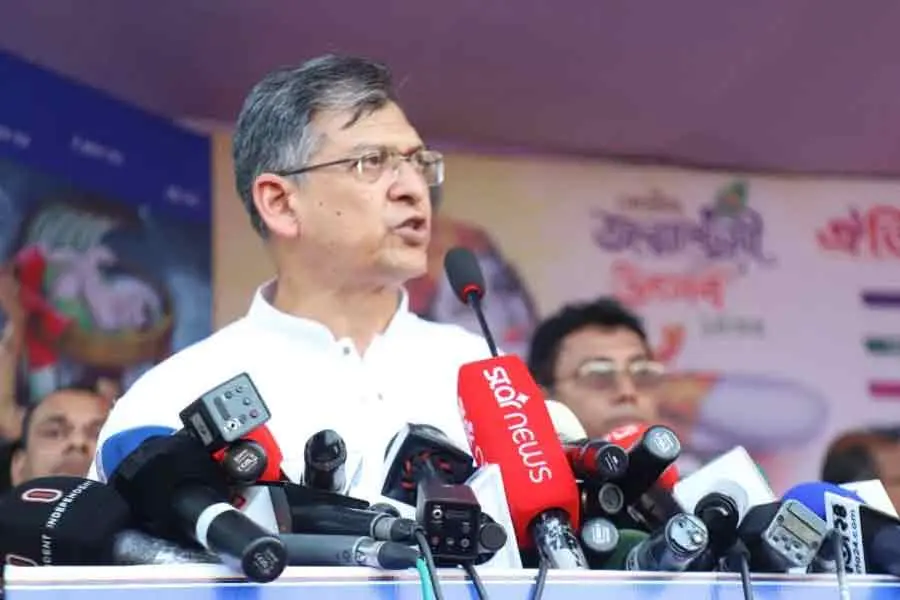
Home Minister Salahuddin Ahmed placed the Special Response Battalion Bill, 2026, in parliament on Thursday.
The proposed law seeks to repeal the legal provisions under which RAB was formed and establish SRB as a specialised unit under the police.
OPPOSITION SEEKS BROADER DISCUSSION
Opposition Chief Whip Nahid Islam objected to the introduction of the bill.
He said RAB had become controversial both at home and abroad over allegations including enforced disappearances, extrajudicial killings and secret detention during the previous government.
Nahid argued that political parties had pledged before the election to abolish RAB and questioned whether creating another specialised force under a different name would fulfil that commitment.
He said RAB should be abolished and any proposal for a replacement specialised unit should first be discussed in detail in parliament.
Opposition Leader Shafiqul Rahman also supported abolishing RAB but called for further consideration before a new agency is created.
GOVERNMENT DEFENDS PROPOSAL
Responding to the objections, Home Minister Salahuddin Ahmed said the government’s electoral commitment was that there would be no organisation called RAB.
He said the proposed law was intended to fulfil that pledge while preserving the state’s need for a specialised police unit.
The minister also argued that allegations against individual senior officers could not by themselves justify abolishing an entire law enforcement institution.
He said the proposed SRB would contain stronger provisions for transparency, accountability and oversight than the existing framework.
Opposition lawmakers were urged to participate in the parliamentary committee’s scrutiny of the bill and submit their recommendations during that process.
RAB ASSETS AND PERSONNEL TO TRANSFER
Under the proposed legislation, RAB’s manpower, orders, powers, facilities, funds, liabilities, contracts, movable and immovable property, registers, records and bank deposits would be transferred to the SRB.
The new unit would operate under the police.
Its personnel could include police officers, members of other disciplined forces on posting or deputation, and other officers and employees as prescribed by the government.
The SRB would have its own flag, emblem and uniform.
Its Director General would be a serving police officer of at least the rank of Additional Inspector General of Police.
POWERS OF THE PROPOSED SRB
The proposed unit would have authority to investigate criminal offences and carry out searches, arrests and seizures.
It would also be allowed to maintain its own detention facilities, malkhana and interrogation rooms.
The bill proposes a multi-member grievance redress committee to handle complaints from citizens as well as internal grievances raised by SRB personnel.
According to the statement of objects and reasons, the unit would assist the police and other law enforcement agencies in maintaining public security and responding to terrorism, organised crime and other serious offences.
The government says the proposed legal framework is also intended to strengthen rule of law, human rights protection, transparency, effective oversight and accountability.
The bill was sent to the Parliamentary Standing Committee on the Ministry of Home Affairs for scrutiny.
The committee has been asked to submit its report within four working days.
APBN BILL ALSO PLACED
The home minister also introduced the Armed Police Battalions Bill, 2026.
That bill seeks to repeal the existing APBN ordinance and establish a new legal framework for the force.
The proposed law provides for police units including the Special Security and Protection Battalion, Hill Battalion and Airport Battalion, along with other battalions the government may prescribe.
Under the bill, APBN would receive powers to investigate criminal offences.
Subject to the Code of Criminal Procedure and other applicable laws, its members would also be able to enter premises, conduct searches, seize property and make arrests.
The proposed legislation further sets out disciplinary and conduct requirements for APBN members.
They would generally be prohibited from involvement with outside organisations, although membership of approved professional associations connected to their professional development or APBN interests would remain possible.
APBN members would also require prior permission from the competent authority before publishing or helping publish certain information or documents in electronic media or newspapers.
The APBN bill was also sent to the Parliamentary Standing Committee on the Ministry of Home Affairs for scrutiny.