Bangladesh-US Relations Move Beyond the Tariff Bargain
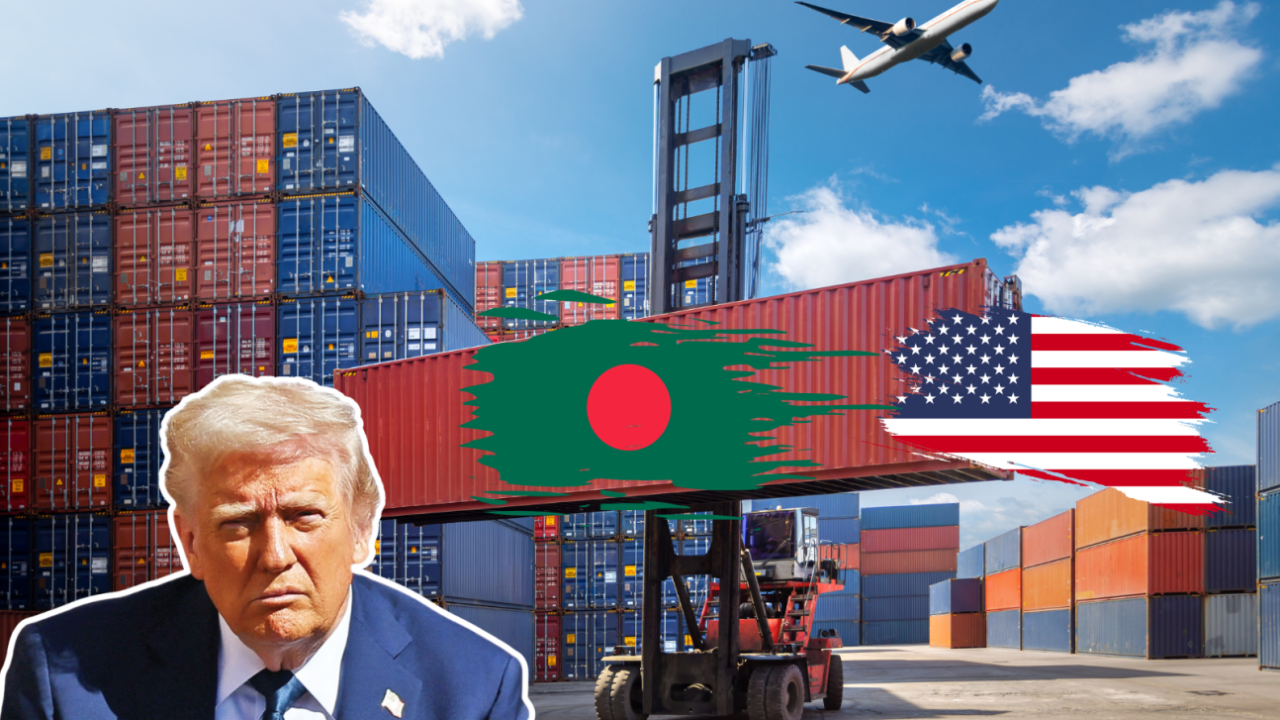
Bangladesh’s relationship with the United States is entering a broader phase in which tariff negotiations are becoming increasingly connected with investment, energy, labour standards, technology and security cooperation.
The shift became particularly visible after the United States announced a 37 percent reciprocal tariff on Bangladeshi products in April 2025. Months of negotiations followed, with the proposed rate gradually reduced before the two countries signed an Agreement on Reciprocal Trade in February 2026. The process demonstrated both Bangladesh’s growing capacity for trade diplomacy and its vulnerability to sudden changes in the policies of major export markets.
The situation also showed that tariff agreements alone cannot guarantee predictable market access. Legal and policy changes in the United States subsequently altered the mechanism through which additional duties could be imposed. For Bangladeshi exporters, this means access to the US market has become increasingly dependent on regulatory developments, political decisions and continued negotiations.
The commercial importance of the United States remains substantial. Total bilateral trade reached about $11.8 billion in 2025, with Bangladesh exporting approximately $9.5 billion worth of goods to the US while importing around $2.3 billion in American products. The resulting trade imbalance has also increased pressure on Bangladesh to purchase more US goods.
Ready-made garments remain at the centre of the relationship. Bangladesh’s apparel exports to the United States reached around $8.2 billion in 2025, while its share of the US apparel market increased from 9.26 percent to 10.53 percent. The performance showed that Bangladeshi manufacturers could remain competitive even during a period of considerable tariff uncertainty.
However, the picture became less encouraging in the first half of 2026. Apparel shipments to the United States fell by 5.75 percent year on year to approximately $4.01 billion, while several competing exporting countries performed better. The decline highlights the danger of treating strong performance in a single year as evidence of long-term security.
Bangladesh’s dependence on garments also remains a major structural weakness. A narrow export basket, particularly one concentrated in relatively low-value products, limits the country’s negotiating leverage and makes exporters more vulnerable to price competition. Buyers can move orders between competing countries when relatively small cost differences emerge.
Diversification therefore needs to become an economic priority rather than simply a policy objective. Pharmaceuticals, leather and leather goods, information technology services, light engineering, agro-processing and higher-value garment production could provide additional sources of export growth if they receive adequate infrastructure, financing and regulatory support.
The evolving relationship with Washington is also extending beyond conventional trade. Labour rights, forced-labour restrictions, minimum-wage review mechanisms, environmental policies, digital trade, investment and economic security have all become increasingly connected with bilateral economic discussions.
Commercial commitments are another important part of the relationship. Bangladesh may increase purchases of American agricultural commodities and energy products, including cotton and LNG. Such imports can serve genuine domestic needs, particularly because the garment industry relies heavily on imported cotton and the energy sector requires dependable fuel supplies. The more important question is how these purchases interact with Bangladesh’s access to the US market.
At the same time, security cooperation between the two countries is becoming more visible. Joint military activities, maritime-security discussions, humanitarian and disaster-response cooperation and talks on defence information-sharing arrangements indicate that the bilateral relationship is developing a stronger strategic dimension.
Recent high-level diplomatic and military engagement reinforces that trend. Discussions between the two sides have covered trade and investment alongside pharmaceuticals, technology, maritime security, the Rohingya crisis and broader economic-security cooperation. Bangladesh is therefore receiving more direct attention from Washington than it did in the past.
That does not mean US policy towards Bangladesh exists separately from regional geopolitics. Washington continues to view developments in Bangladesh within the wider context of India, China, Myanmar, the Bay of Bengal and the Indo-Pacific. Bangladesh is gaining greater individual strategic importance while remaining part of a much larger regional calculation.
For Dhaka, the challenge is to benefit from stronger US engagement without allowing its relationship with any major power to restrict its strategic options. Closer cooperation with Washington does not necessarily require weaker relations with Beijing, New Delhi or other partners. Maintaining productive relationships with multiple powers can give Bangladesh greater room to pursue its own economic and national interests.
Bangladesh’s planned graduation from Least Developed Country status adds further urgency to these economic challenges. Regardless of the final timing of graduation, the country remains heavily dependent on a limited range of exports and favourable access to overseas markets. Building competitiveness that does not depend primarily on preferential treatment will therefore become increasingly important.
Domestic reforms will ultimately determine how much Bangladesh benefits from greater international attention. Improving port efficiency, modernising customs, ensuring reliable energy supplies, reducing trade costs and strengthening labour productivity can have an impact that extends far beyond any individual tariff negotiation.
Bangladesh also needs stronger institutional capacity for increasingly complex international negotiations. Trade discussions now involve tariffs, labour regulations, energy, investment, digital policy and even security issues. A permanent and coordinated body of specialists would place the country in a stronger position than a fragmented approach involving multiple agencies with overlapping responsibilities.
The long-term objective should therefore be larger than obtaining a favourable tariff rate from the United States. Bangladesh needs to build an economy with enough diversity, productivity and institutional strength to make the country valuable to multiple international partners.
In the coming decade, Bangladesh’s strongest position will not come from choosing one major global power over another. It will come from creating competitive industries, efficient institutions and a strong international reputation that give major powers compelling economic and strategic reasons to maintain constructive relations with the country.