Why the Global South Must Rethink Export-Led Growth
The export-led development model that has shaped many developing economies for decades is facing growing challenges as global trade tensions, financial instability and geopolitical rivalries intensify, according to economist Prabhat Patnaik.
Patnaik, professor emeritus of economics at Jawaharlal Nehru University, argues that the neoliberal economic system has reached a point where its traditional assumptions about relatively unrestricted movement of goods, services and capital are increasingly under pressure.
He believes growing inequality has contributed to stagnation and unemployment, while the return of protectionist policies in major economies demonstrates the limitations of the existing model. Developing countries, however, may find it difficult to pursue alternative strategies because of their dependence on global finance.
According to Patnaik, governments seeking to reduce inequality or strengthen domestic demand may want to tax the wealthy, increase public expenditure or protect selected domestic industries. Such measures can conflict with the preferences of globally mobile finance, creating the risk of capital outflows and financial instability.
For countries such as Bangladesh, he therefore argues that greater control over financial outflows would be necessary to achieve meaningful economic policy autonomy. But capital controls would have wider consequences and could require changes in trade policy and the management of balance-of-payments pressures.
In his view, moving away from the existing model would therefore require a coordinated transformation rather than a series of small policy adjustments. Such a strategy would involve greater state intervention and a stronger emphasis on domestic economic priorities.
Patnaik also argues for a rights-based welfare system. He identifies access to food, employment, healthcare, education and pensions as areas that could be treated as fundamental economic rights and financed through greater taxation of the wealthiest sections of society.
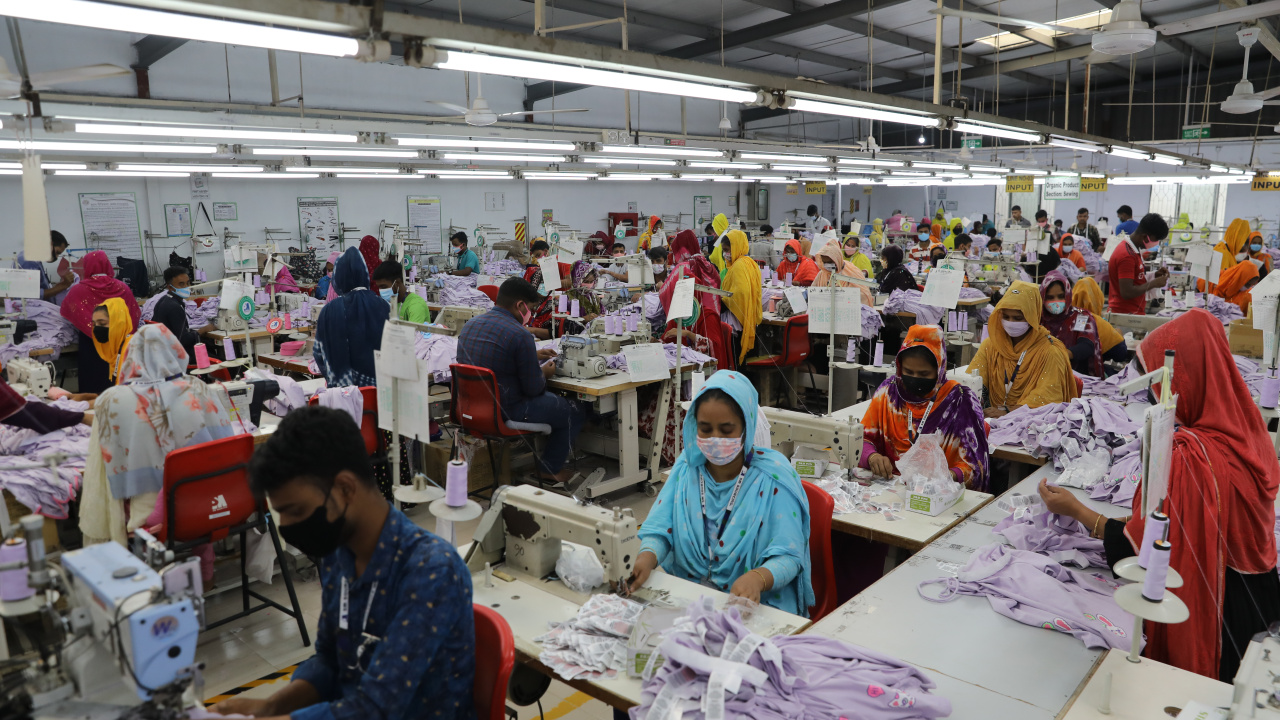
Bangladesh presents an important example of the debate over export-led development. The country’s economic expansion has been closely associated with ready-made garments and its ability to compete in international markets through large-scale manufacturing and relatively low production costs.
Patnaik argues, however, that there is an inherent limitation when many countries simultaneously depend on exports as their main source of growth. Global exports cannot indefinitely grow faster than the global market itself, meaning countries ultimately compete against one another for market share.
Under such a system, stronger export performance by one economy can come at the expense of another. He contrasts this competitive model with growth driven primarily by domestic demand.
Patnaik argues that employment trends also demonstrate the limitations of relying excessively on global market expansion. When productivity rises faster than overall demand for labour, economic growth may remain insufficient to absorb new entrants into the workforce as well as those already unemployed or underemployed.
For that reason, he advocates greater reliance on domestic markets. Large economies may have sufficient internal demand to pursue such a strategy independently, while smaller countries could strengthen regional economic cooperation to create larger markets.
A domestic-market strategy would not require countries to abandon international trade. They could continue importing and exporting goods, but the primary source of economic expansion would increasingly come from domestic consumption, investment and productive activity rather than dependence on continuously expanding foreign demand.
Agriculture would play a central role in such a transition. Increasing rural incomes and agricultural productivity could expand purchasing power and create additional domestic demand for industrial goods and services.
Patnaik also links economic sovereignty to the way the international financial system handles trade imbalances. He argues that deficit countries are typically required to reduce domestic spending to restore external balance, often through austerity and lower consumption.
This adjustment can reduce employment, output and living standards in countries already experiencing economic difficulties. He argues that greater self-reliance could reduce the exposure of Global South economies to these recurring external pressures.
Food security is another major part of the proposed strategy. Patnaik warns against excessive dependence on imported foodgrains while agricultural land is increasingly devoted to export-oriented cash crops.
Dependence on food imports can leave developing countries exposed to geopolitical disruptions, sanctions, international price movements and foreign exchange shortages. Falling cash-crop prices can also reduce the purchasing power needed to finance food imports.
For this reason, he argues that maintaining sufficient domestic foodgrain production should be viewed not merely as an agricultural objective but as an important component of national economic security.
Greater economic independence, in Patnaik’s view, ultimately means allowing domestic democratic choices to determine economic policy. He argues that highly mobile international finance can restrict those choices because governments may fear that policies disliked by investors will trigger large financial outflows.
Controls on financial outflows therefore form one component of his proposed alternative. Other elements include stronger domestic demand, agricultural development, an expanded public sector, a rights-based welfare system and greater decentralisation of economic decision-making.
Patnaik believes the changing global environment makes the search for alternative development strategies increasingly important. Trade restrictions, geopolitical competition and efforts by major powers to secure resources are creating new pressures for developing economies.
For Bangladesh, the central challenge is therefore broader than maintaining export growth. The country must consider how to retain the benefits of international trade while reducing vulnerabilities created by excessive dependence on external markets, imported essentials and international finance.
An alternative strategy would require balancing exports with stronger domestic demand, improving agricultural resilience, developing the public sector where necessary and creating social protections capable of ensuring that economic growth produces broader improvements in living standards.
The wider argument is not that Bangladesh or other Global South countries should withdraw from international commerce. Rather, Patnaik advocates a development model in which trade supports national economic objectives instead of becoming the principal force determining them.
As the global economic order becomes more fragmented, the debate increasingly centres on whether developing countries can create sufficient policy space to pursue their own priorities while continuing to participate in international trade and investment.